Sustainability

For the Semapa Group, sustainability rests on our commitment to the environment, social responsibility and the best corporate governance practices, which shape our standards of conduct. Environmental and social awareness underpins all our actions and is directly interconnected with the Semapa Group’s corporate policies.

Image

Sustainability

Image

Sustainability Reports

Environment

Making it Better means being an integral and active part of creating a more sustainable future. This is a mission for Semapa, which invests its resources with the aim of creating value and having a positive impact on the quality of life of present and future generations.

We embed our concern for the environment into our daily activities and into our decision-making and investment processes. Our priorities and those of our subsidiaries in the field of environmental sustainability are climate change mitigation, using water resources responsibly, biodiversity protection and the promotion of a circular economy.

The strategy, objectives and actions developed by Semapa and its subsidiaries to address their environmental priorities are highlighted in the Annual Report, in chapter

4. Sustainability.
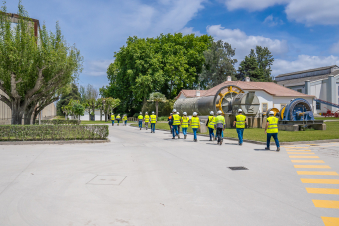
Social Responsibility

Semapa adopts a strategic approach geared towards enhancing its human capital, recognising that its employees are an essential element for innovation, sustainability and long-term performance. The Group embeds into its corporate vision practices that promote the well-being, health and safety of its workers, as well as their development and motivation, reflecting an organisational culture centred on social responsibility, excellence and collective progress.

In the communities where it operates, Semapa Group – in line with its Making it Better purpose – recognises the importance of the impacts its activities can have. As the first link in the value chain to feel the effects associated with its various industrial and forestry operations, these communities play an essential role in integrating the activities of Semapa and its subsidiaries, which seek to develop a social responsibility approach that ensures their presence has a positive impact on the quality of life of their workers and the surrounding communities.

This approach includes maintaining a transparent and close dialogue, strengthening our relationship and bond with communities. Internationally, The Navigator Company (through Portucel Moçambique) has been implementing its Social Development Programme, which has given rise to new lines of action.

One example is the repair of water boreholes built by other entities, an activity not foreseen at the start of the Programme, but developed at the communities’ request, improving their well-being.

Reflecting the Group’s commitment, the Fundação Semapa – Pedro Queiroz Pereira was established in 2024, with the primary mission of promoting Education and Social Protection.

More information about the objectives and actions developed by Semapa and its subsidiaries in the context of their relationship with their workers and communities can be found in the Annual Report, in chapter 4.Sustainability.

Business Conduct

Semapa recognises that adopting a responsible business conduct is an essential pillar of its strategy and business model, directly influencing long-term value creation, the trust of its stakeholders and the resilience of its operations.

Promoting high standards of ethics, transparency and accountability throughout the value chain has a significant impact on organisational performance, corporate reputation and the continuity of the Group’s activities.

The Group’s corporate culture is reflected in a structured set of policies that guide the conduct of Semapa and its subsidiaries and reinforce its commitment to sustainability and good governance. These policies set out clear guidelines for the Group’s actions, ensuring integrity in its relationships with employees, suppliers, customers and other stakeholders.

The policies, as well as the actions developed by Semapa and its subsidiaries in relation to business conduct, are highlighted in the Annual Report, in chapter 4. Sustainability.